
Boxing has always been strong in the Llynfi Valley. C B Thomas set up a school for physical culture and boxing in the Navigation Hotel Caerau in 1909. He produced 12 amateur champions and 7 runners up.
Among the boxers of note in the valley were
- Billy (Kid) Hughes was a Welsh flyweight champion. He later became promoter, referee and manager of several Welsh champions and was elected a member of the Welsh Area Council of the British Boxing Board of Control.
- Harry Davies of Caerau was Amateur middleweight champion of Wales in 1912 and 1913. In 1916 he he became Welsh professional middleweight champion.
- Ivor Pickins was welterweight champion of Wales and once fought the world champion Jack Berg.
- Ossie Davies was amateur welterweight champion of Wales and later Great Britain. He was also Army Welterweight Champion
- P C Rees Howells was Welsh amateur middleweight champion in 1923/24/25 and lightweight champion from 1926 to 1930.
- Stan Jehu was Welsh professional bantamweight in 1930 and featherweight champion in 1933 and 35champion
- W H Davies of Caerau became amateur light heavyweight champion of Wales in 1934 and 35 and amateur heavyweight champion in 1936, 1937 and 1939
Others include
- Tommy Edmonds was Welsh amateur welterweight champion in 1931 and 32
- Emlyn Lewis was NCB National bantamweight champion for 1948
- Norman Jenkins of Caerau was Welsh welterweight champion 1952
Others include Lennie Williams, Mike McCluskie and Jason Cook of more modern times. More detail can be found below.
Lennie (The Lion) Williams
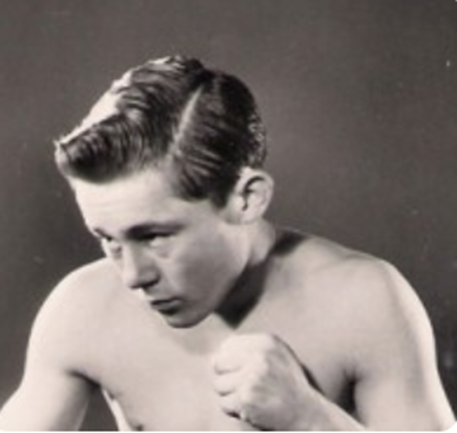
Fights: 37
Wins: 33
Lost: 3
Draw: 1
KO: 25
Professional Career: 1961 – 1966
LENNIE WILLIAMS
(1944-2016)
British and European Featherweight Challenger
1966
1966
Welsh Featherweight Champion
1963-66
It was a battle to discover the king of the fistic jungle. Neither ‘The Lion’ nor ‘The Tiger’ owned a belt, but back in the days when boxing was a staple of the BBC’s television schedules, everyone knew who they were. And when they topped the bill at a sold-out Albert Hall on April 9, 1963, the world stopped to watch.
The striped cat in the conflict was Frankie Taylor, a trainee journalist from Lancaster, who had turned 21 the previous week. A European gold medallist and Olympian, he had won all 14 as a pro, 11 of them quickly.
The main man was Maesteg southpaw Lennie Williams, barely 19 and newly wed, who had packed 28 paid successes into a career which began at 16. Only five foes had taken him the distance – and four of them were halted in rematches. It was a showdown to be savoured.
Williams, whose father boxed pro as Glan Pitman, worked as a colliery blacksmith, the same as former Welsh fly ruler Glyn David, whose boxing gear he had inherited. His power was obvious from his triumph in the British junior championships, when his eight victories needed fewer than nine rounds in total. His youthful entry into the pro ranks with Cardiff-based Benny Jacobs and trainer Ernie Hurford had seen him win his debut in 50 seconds and even a damaged wrist, sustained punching the heavy bag, barely slowed his progress.
His 23 stoppages pre-Taylor included 18 inside three rounds, and with the Lancastrian boasting similar artillery, few expected their collision to last long. Lennie was so keen to prove the point that he twice danced out to the centre of the ring before the first bell, referee Harry Gibbs ordering him to wait in his corner. Finally unleashed, he stormed across to Taylor in a whirlwind of blows which prompted a furious response; within seconds the crowd were deliriously cheering the unbridled punch-up they had come to see.
By the fourth Frankie’s greater skill was beginning to show amid the mayhem and the Welshman, whose preparation was disrupted when his wife was rushed to hospital in London, found it difficult to maintain the frenetic pace he himself had set. He battled back in the fifth, with Taylor nicked near both eyes, and threw everything into trying to end matters, but the effort drained his remaining resources and ‘The Tiger’ realised it; a left staggered Williams and a perfect right cross sent him down face-first, unable to beat the count.
Five months later they were head to head once more, this time at Wembley’s Empire Pool. There was less ballyhoo, with media attention focussed on the main event between heavyweight rivals Billy Walker and Johnny Prescott and an exhibition involving the fearsome world champion, Sonny Liston. But the two cubs provided tremendous entertainment, only for the ending to be inconclusive.
They stood toe-to-toe for the first three rounds, although Lennie seemed to be pacing himself better than before. But in the fourth he landed a left hook on Taylor’s hip and returned to his stool grimacing in agony. The wrist was broken and manager Jacobs called referee Jack Hart over to announce his man’s retirement.
It was nine months before Williams, now living in Tonyrefail, was back in the ring, but he left it as Welsh featherweight champion. The opposite corner housed Caerphilly taxi driver Billy Thomas, already ranked No 8 in Britain. They clashed at the Drill Hall in Cardiff’s Dumfries Place on June 30, 1964, with many suggesting that if Billy could survive the first three sessions he could tame ‘The Lion’.
The question remained unanswered. The speedy Thomas managed to avoid serious trouble for much of the opener, but a volley of body shots had him doubled up at the bell. After a one-sided second, Lennie unloaded in the third and sent Billy to his knees, with handler Mac Williams claiming his charge had been hit while down. North Walian referee Billy Jones was unmoved and, with Thomas offering scant resistance on resuming, stepped in to call a halt.
Mac, naturally, demanded a return, but he had to wait more than two years before his wish was granted at Carmarthen’s Market Hall. Both crashed through the ropes on to the press table in the first, but the following session saw Thomas down twice, the second time for keeps.
It was an important victory. Within days the Board ordered British and European champion Howard Winstone to defend against his fellow-countryman and they came together at the Afan Lido on December 7, 1966. Williams’s boyhood hero had already won two Lonsdale Belts
Mike McCluskie
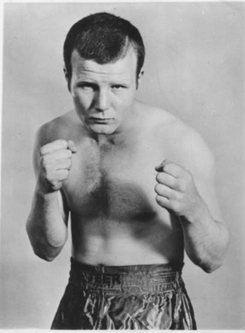
Fights: 16
Wins: 8
Lost: 7
Draw: 1
KO: 3
TKO: 2
Professional Career: 1971 – 1973
Mike McCluskie
(1950 – )
Represented Wales at the Commonwealth Games
1970
Welsh Amateur Boxing Champion
1971
Welsh Professional Boxing Champion
1973
It was obvious from an early stage that Michael Thomas William McCluskie had something about him in a boxing ring. He was just 13 when he claimed his first Welsh schools title and he went on to become British champion in youth, boys’ clubs and Army cadet competitions.
He and a few mates from Caerau Park took up the sport when Glan Pitman and Jackie Williams opened a gym at the North Memorial Hall in nearby Maesteg, and Glan’s son, local hero Lennie ‘The Lion’ Williams, trained there. The other lads drifted away, but miner’s son Mike, one of nine children, stuck to it – and kept on winning. As a senior he conquered Wales’s welterweights three years running, earning a trip to the 1970 Commonwealth Games in Edinburgh, but fell at the first hurdle, losing a debatable decision to Tommy Joyce, a Doncaster-based Scot.
After a brief training stint down the pit – he hated the dust – Mike switched to a factory, but when bosses refused him time off to box it was a deal-breaker. He worked for a while as a bookbinder, but then took a scaffolding job at Baglan Bay, where he remained for 20 years. Its proximity to Llanelli was one reason he signed with Glynne Davies, newly retired from his own pro career.
After winning four of his first five bouts, the Caerau man lost four of the next five. But once he buckled down in the gym, the improvement was evident, a lucky draw with Cardiff-based Merseysider Ronnie Hough turned into a knockout victory in a rematch.
Chances still had to be grabbed when they arose. Mike was enjoying a Saturday night dance when the call came for a fight in Manchester 48 hours later – against Olympic bronze medallist Alan Minter! The future world champion duly won in five, but amid huge controversy. Referee Ron Hackett ruled that McCluskie had failed to beat the count after being floored by a right hook, but most present agreed that the Welshman was up and ready at nine.
He demanded a return, but Minter was too busy chasing belts, so Mike focussed on his own title ambitions, boosted by a decision over Swansea’s Jeff Burns. There was only a quarter-point between them and there were calls for them to meet again for the Welsh title.
The Llynfi Valley warrior was not prepared to sit around waiting. Twice he was bested by Pat Dwyer, a Scouser who had challenged for a Commonwealth belt, and Hough gained his revenge in a rubber match at Haverfordwest before McCluskie faced Burns again on June 27, 1973, back at the site of their first clash, the Top Rank Suite in Jeff’s home city. This time there were no arguments.
The pair battled mainly at close quarters, Burns targeting the body while Mike manoeuvred to land left hooks and uppercuts. Finally, in the eighth of a gruelling contest, he succeeded, Jeff walking on to a big left which sent him crashing. He tried to regain the vertical when the count reached eight, but was unable to manage it before the fatal 10.
Any lingering doubts about McCluskie’s supremacy were dismissed three months later when the duo came face to face at the National Sporting Club. Burns was a late replacement, but put Mike under pressure until a big right to the jaw midway through the fourth dumped the Swansea product on the deck. He succeeded in dragging himself upright – at the second attempt – but as he moved towards his tormentor his legs betrayed him and referee Benny Caplan called a halt.
One month later McCluskie was back at the club’s Café Royal headquarters to take on future British ruler Trevor Francis, who floored him in the fourth and finished matters two sessions later.
And that was that. Feeling that he had taken things as far as he could – though he still wonders what he might have achieved with better sparring – and having earned enough to buy the house in Lloyd Street where he and wife Christine have now lived for half a century, Mike turned his back on the ring for good.
Jason (The Power) Cook

Fights: 37
Wins: 30
Lost: 6
Draw: 1
KO: 11
Professional Career: 1996 – 2014
Jason Cook
(1975 – )
Amateur Boxing Association Champion
1993
Commonwealth Games Silver medal
1993
turned professional
1996
Welsh Boxing Association Champion
1999
European Boxing Champion
2002
IBO World Champion
2003
WBA Champion
2010
BBA Challenger
2010
BBA Challenger
2011
Celtic Boxing Champion
2014
It was the punch which rocked Italy. Yet hardly anyone in Britain was aware of it. Not one representative of the UK media was at ringside in Calabria when Jason Cook, from Maesteg, climbed through the ropes to face Sandro Casamonica for the vacant European lightweight throne.
There were mitigating circumstances. The bout took place at San Mango d’Aquino on August 2, 2002, just as the Commonwealth Games were reaching their climax in Manchester. Cook was called up at 10 days’ notice, while Casamonica was a former world title challenger. Few gave the Welshman a chance.
Even Jason had his doubts. He had to shed more than a stone to make the weight and would not have argued too much with the oddsmakers who installed Casamonica as an 11-1 favourite. But ‘Cookie’ had one thing going for him. He could bang.
A four-figure crowd at the outdoor venue saw Casamonica – known as ‘Zorba’ – work behind a solid jab in the opening sessions, although Jason kept going forward. There was no hint of the mayhem to follow in the third. Sandro struck first, a clubbing right dumping Cook on the canvas, and, urged on by his screaming supporters, stormed in to end it when action resumed. Jason battled back, hurting his man with a left. Sensing an opportunity, the Llynfi Valley boy threw a right hand so wildly that he fell halfway through the ropes and Finnish referee Erkki Meronen had to delay matters to help disentangle him.
As they were waved back in, Cook unleashed a perfect left hook which landed smack on the jaw. ‘Zorba the Italian’ was unconscious before he hit the deck and Meronen gave up the count to allow a doctor to attend the stricken fighter. It was fully four minutes before Casamonica rose to his feet and the new champion could celebrate.
It was arguably the high point of a career which began when an asthmatic 11-year-old, raised by his mother on the Oakwood estate, first entered Maesteg ABC’s gym and met Bryan Evans, the former Howard Winstone sparmate who ran the place. Young Jason had his first bout in a workingmen’s club in Tonyrefail and was battered from pillar to post. Less than two weeks later he faced the same lad and won by a stoppage.
Progress was swift. Three Welsh schoolboy titles were followed by national senior honours at featherweight and a one-round demolition of highly touted Londoner Marcus McCrae in the British final. A further Welsh success earned a place at the 1994 Commonwealth Games in Canada.
He was to become the only Welsh ring medallist in Victoria, seeing off foes from Papua New Guinea, Nigeria and Tanzania before falling short in the final against the host country’s useful Casey Patton. There followed two more Welsh titles before Cook signed for Matchroom boss Barry Hearn, Rhoose-based Tony Alsop training him following a spat with Evans. Five wins were followed by a shock first-round defeat against Brummie Trevor Smith. It was nine months before Cook, now working as a postman, returned, having kissed and made up with Evans. Four bouts later, Jason was strapping on his first belt.
Cook was due to contest the vacant Welsh lightweight crown at Merthyr’s Rhydycar Leisure Centre on December 11, 1999. But when Gelligaer southpaw Woody Greenway came in several pounds over the limit, the area council simply bumped things up to the next weight class. It made little difference: Jason knocked out Greenway in the first. He retained with a whitewash over another Rhymney Valley left-hander, Keith Jones, and beat former Olympian Dariusz Snarski in Poland before his journey ground to a halt.
Jason admitted helping himself to cheques and money orders from the mail he was supposed to deliver and was jailed for 15 months, although freed on licence after less than six. Once the Board had given permission for him to box there were three rust-removers before he received that late call to Italy and European glory.
Suddenly, he was back on track. The title was defended with a five-round stoppage of Frenchman Nasser Lakrib at Maesteg Leisure Centre – the first pro show in the town for 38 years – before facing former WBA ruler Stefano Zoff in Bridgend on a bitter-sweet weekend. Jason won a split decision to claim the best scalp of his career, but had already lost his title when he came in overweight. Even the victory was questionable, with one judge awarding Cook the second, a session in which he was floored; if the man had given it to Zoff by the usual 10-8 margin, the Italian would have won.
Despite everything, Jason insisted he was genuinely a lightweight and before the year was out his stance was vindicated – and with a world title, albeit from the low-rent International Boxing Organisation. Cook staked his claim on home ground, just down the road at Bridgend Recreation Centre, on November 8, 2003. In the other corner was Argentinian champion Ariel Oliveira, waiting with all the confidence one would expect of a man who had dyed his hair bright green.
But as early as the opener, Jason, living up to his billing as ‘The Power’, dropped the visitor with a left hook, although it damaged the aggressor’s hand as much as the recipient’s jaw. Cook used the right to send Oliveira back to the canvas in the second. Ariel was game, his own efforts dislodging the Welshman’s patriotic red, white and green mouthpiece, but he found himself on the deck again in the fifth and when a right-left combination dropped him for a fourth time late in the seventh, referee Marcus McDonnell called a halt.
Commonwealth boss Kevin Bennett, a Hartlepool-based Brummie whose father hailed from Tonyrefail, was first to challenge, also in Bridgend, but the expected thrills never materialised, in part because Cook was hampered by the left shoulder problem that blighted his later years in the ring. Former soldier Bennett was far from militant as Jason claimed a unanimous decision, repeating a victory gained when the pair were 14-year-olds.
Next up, across the border at a packed Hereford Leisure Centre on November 5, 2004, was Argentinian Aldo Rios, whose success owed much to the effects of another Cook battle with the scales. The holder looked sluggish, but it was still unexpected when a right early in the third stiffened Jason’s legs and the South American champion pounced. Two more rights sent Cook over, in serious trouble. Referee Richie Davies, convinced by a brave little jog to allow the Welshman to continue, stayed close at hand and leapt to the rescue when Aldo began to get through again midway through the session. Ironically, Rios was found to have taken a diuretic to help him make the 9st 9lb limit and was stripped of his newly acquired honour.
After a year out, Jason returned to the ring, only for that troublesome shoulder to sideline him again. Frustrated, he announced his retirement. It was four years before he reappeared, trying his hand at one of Matchroom’s popular Prizefighter tournaments, losing in the semi-final to former world champion Gavin Rees. It was enough to convince the authorities that Cook could make 10st, however, and he was granted a crack at British ruler Lenny Daws at the famous old York Hall on February 12, 2010.
The first eight rounds were nip-and-tuck, the taller Londoner using his jab well and the visitor having some joy with his combinations. But Jason tired down the straight and the Welshman looked somewhat embarrassed when the judges were split three ways. The draw meant Daws kept his title, but Cook had justified his selection and would get another chance.
First came a meeting with Rhondda stylist Barrie Jones at the Newport Centre for his old Welsh throne, now unoccupied. Jones controlled matters with his southpaw skills until ‘The Power’ once again justified the tag. Late in the sixth, a pair of rights to head and body sent Jones to the deck; a further assault downstairs dropped him a second time and third man Roddy Evans waved it off.
A few months later Ashley Theophane, US-based, but Paddington-born, returned home to dethrone Daws and Cook was wheeled out as his first challenger, at Wembley Arena on July 23, 2011. Clearly disconcerted by Jason’s hooks early on, Ashley struck low three times in the first four sessions, finally earning a warning from referee Phil Edwards, a repeat offence in the fifth costing him a point. The Maesteg fighter had been sorely weakened, though, and when another, legitimate, shot sank into Jason’s midriff in the eighth he dropped to his knees, narrowly failing to beat the count.
When unbeaten Wearsider Glenn Foot floored him twice en route to a seventh-round stoppage, that really did seem to signal the end. But Cook still owned the Welsh belt and agreed to defend against Talbot Green ticket-seller Tony Pace at Cardiff’s Motorpoint Arena. However, Jason’s perennial weight-making difficulties recurred and the contest was quickly rebranded to involve the Celtic welter crown, conveniently vacant. Pace held his own for the first nine minutes. But Jason, almost 17 years older, drove home two successive rights and Tony slumped against the ropes, prompting the alert John Keane to dive to the rescue.
A welterweight Prizefighter a couple of months later proved a step too far. Jason looked old and slow and Johnny Coyle, a 20-year-old Essex traveller, took s unanimous decision. With the shoulder still hampering him, and his 40th birthday in the horizon, it was time to bid the game farewell.
Much of the information in this section was provided by the following sources:
Gareth Jones has been writing and broadcasting on Welsh boxing for 50 years, including more than two decades as Welsh correspondent of the trade magazine, Boxing News. These extracts are taken from South, West and Mid Glamorgan, the sixth volume in The Boxers of Wales series. He also wrote Dragons vs Eagles, Wales vs America in the Boxing Ring. Brynley Richards was a local solicitor and keen historian.. He was for some time President of the Llynfi Valley Historical Society and was responsible for writing the book entitled “ History of the Llynfi Valley “ from which much of the information presented here was taken.