


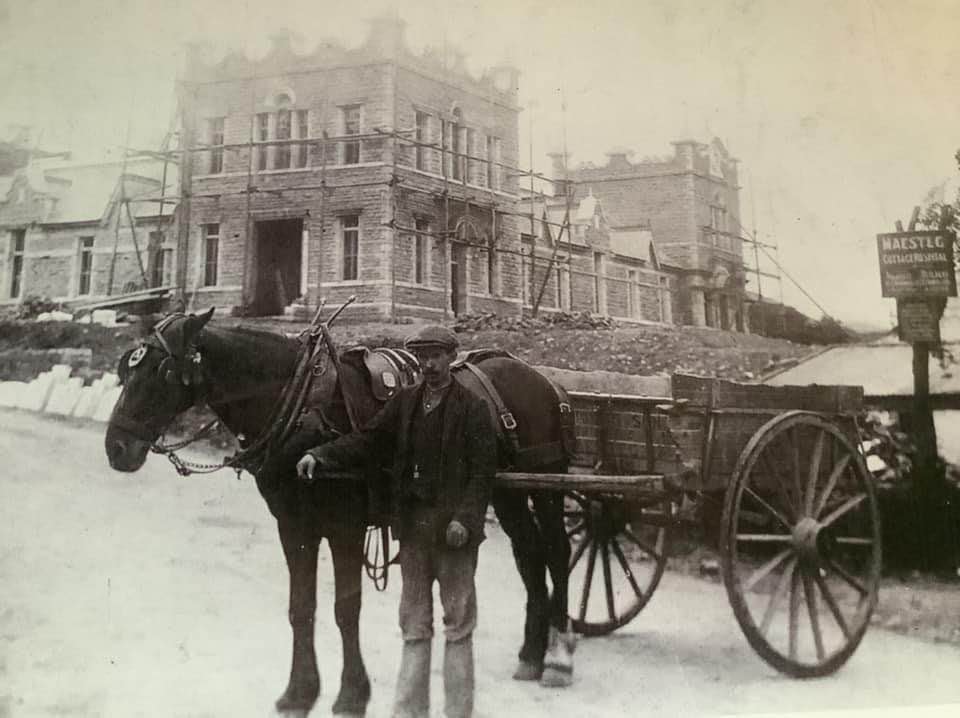
Welcome to the historical section of the bicentennial celebration of Maesteg.
Our exhibition will be concentrating on the beginnings of what was a valley with a population of about 400, to at its peak with about 30,000 people. If you would like to become involved or have any items, photos , documents or even memories we would like to hear from you.
We are currently devising a time line and beginning to design the exhibition. This is going to be extraordinary with exhibits to interest the young and old. The use of technology mixed with local pictures, melded together in a one off exhibition.
A Brief History of Maesteg: Celebrating 200 Years
Maesteg, nestled in the picturesque Llynfi Valley of South Wales, has grown from a “fair field” into a proud and vibrant community. Its name reflects its agricultural origins, but the town’s transformation began in 1826, marking the birth of modern Maesteg.
The Industrial Revolution brought ironworks and coal mining to the valley, attracting workers from across Wales and beyond. By the mid-19th century, Maesteg had become a bustling hub of industry, with the Llynfi Ironworks and thriving collieries driving its rapid growth. The industrious spirit of the people shaped the town’s character, building homes, schools, and strong community ties.
As the 20th century unfolded, the decline of coal and iron brought challenges, yet Maesteg’s resilience and unity prevailed. Today, the town honors its rich industrial heritage while embracing the beauty of its natural surroundings, offering a unique blend of history, culture, and pride.
In 2026, we celebrate 200 years of Maesteg—honouring our past, celebrating our present, and looking forward to a bright future.
How Maesteg Was Born

In the early 1820s the Llynfi Valley was a sparsely populated area with scattered farms, there was no village or hamlet, no cluster of housing just an awareness in the district that the valley had enormous reserves of coal and iron ore waiting to be developed. Unsuccessful attempts at realising the potential of the valley had been made around the year 1800 then, in the mid 1820s, a number of factors combined to bring the forces of the industrial revolution, that were transforming Britain, to the valley of the Llynfi. Demand for iron was increasing and, most important of all, prices and profits were increasing for ironmasters and iron companies. At this time of high prices, the Llynfi Valley with its coking coal and iron reserves became a centre of attraction and, in 1825, a company was formed to build the Dyffryn Llynvi and Porthcawl Railway, a horse tramway, between the valley and a new harbour on the coast. At the same time Thomas Jones with his brothers Charles and William of Abergavenny, spurred on by the growing demand for iron, sought investors to build an ironworks in the Llynfi district. They were not particularly wealthy and capital was in short supply in south Wales so they astutely devised a method of forming an iron company with minimum outlay. They cheaply bought up mineral leases from the landowners of a number of Llynfi farms and, armed with the leases, ventured into the City of London to seek wealthy investors keen to take advantage of high profits in the iron trade. As a result, the bulk of the capital used to build the ironworks came from the London wool trade. Unfortunately, Thomas Jones died before agreements were finalised, the initiative was then taken up by his brother Charles. These developments thus culminated in the formation of an iron company in the valley, in 1826. The most promising coal and iron outcrops occurred on the lands of Maesteg Uchaf Farm, one of the three Maesteg farms spread along the pasture land of the valley floor. The site was near the present day Maesteg School, and the new venture included the name of the farm in its formal title: The Maesteg Iron and Coal Company (generally known as The Maesteg Company). At about the same time work began on the furnaces of the Maesteg Ironworks.
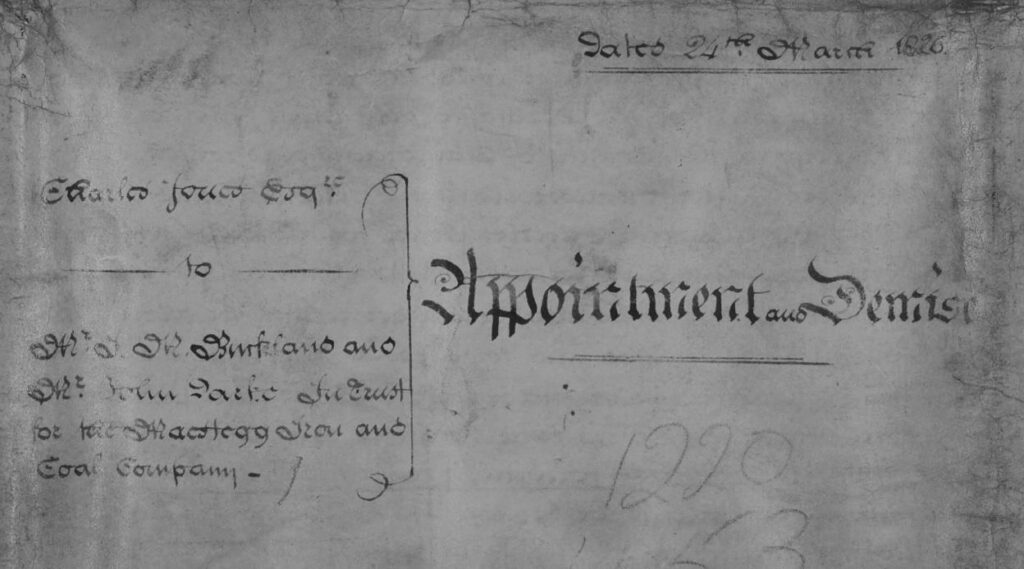
Original held at the Glamorgan Archives, Cardiff. Part of the records of North’s Navigation Collieries (1889) Ltd,
Because of this sequence of events the name Maesteg became associated with the new settlement in the valley, although it was not fully adopted as an undisputed place name until the 1870s (Census Returns included the name Cwmdu for the Maesteg area up to the 1860s). Also, the date March 24th 1826 enters the story because the new iron company was formed and the Maesteg Uchaf Lease was signed on that date. So, the date marks the beginning of the development of the valley and places the Llynfi district among the small number of communities with a precise birthdate and, after two centuries, a cause for celebration.